Private taxi and minibus transfers from Vienna Airport (VIE)
Easy booking. Punctual and reliable service. Professional, multilingual drivers. Serving passengers since 1998.
La Dolce Vienna: Why Italian Groups Flying in for a Weekend Choose Private Airport Transfers
2026-03-15 | TRAVEL GUIDE
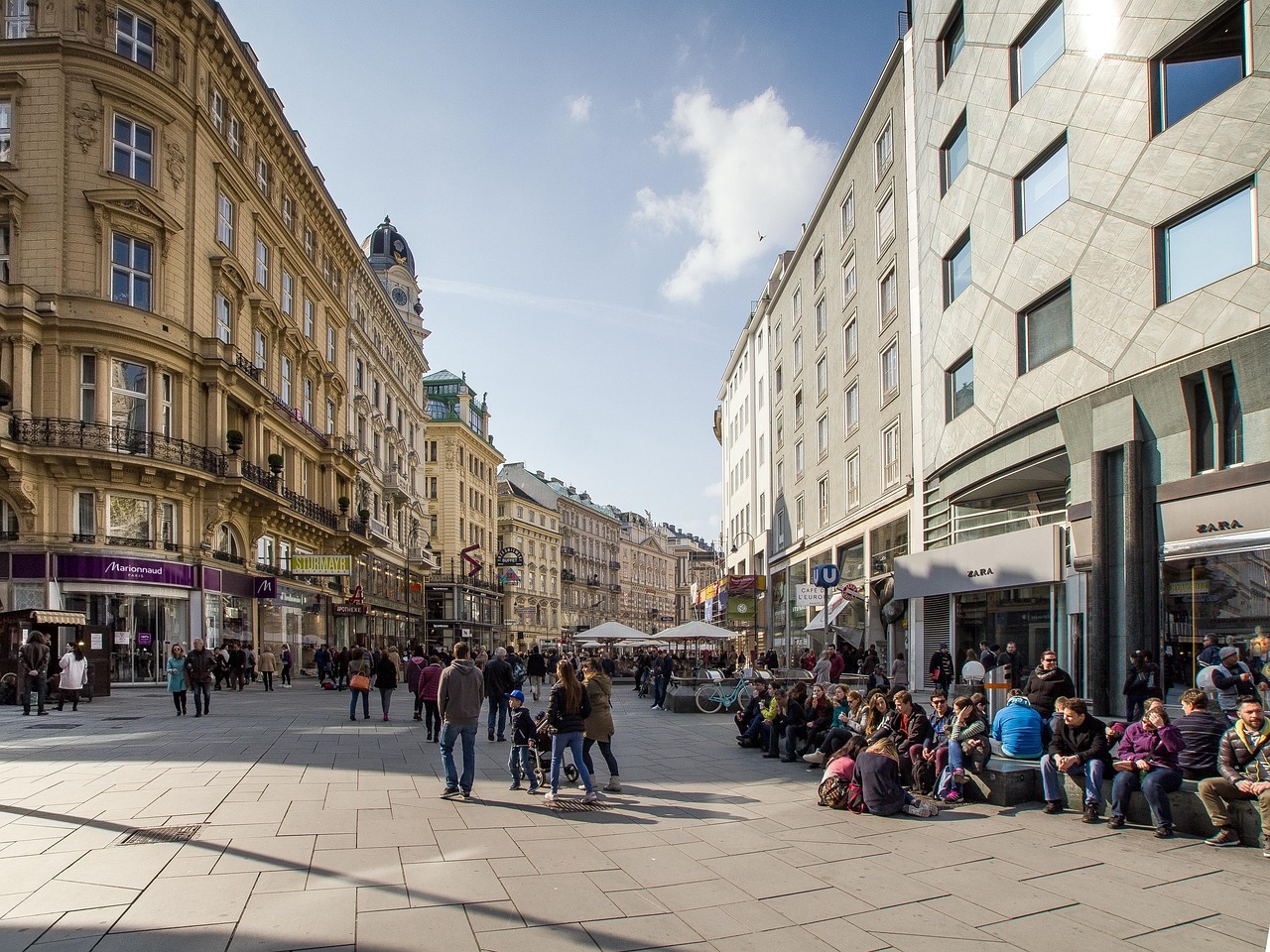
Vienna has been quietly stealing the hearts of Italian weekend travellers for years — and the secret is getting out. Imperial grandeur, extraordinary museums, a coffee culture that Italians recognise instantly and appreciate deeply, and a proximity that makes the whole adventure feel almost effortless. Here is why a private transfer with WienTransfer is the best way to begin it.
There is a specific kind of group trip that Italians do better than almost anyone else in Europe. It begins with a conversation — at a dinner table in Milan, over an aperitivo in Rome, during a lunch break in Naples or Bologna — about how long it has been since the group did something together. Someone opens a flight search on their phone. Someone else names a city. Within twenty minutes, a Ryanair or easyJet booking is being split eight ways and a WhatsApp group has been created with a name that will make everyone laugh for the entire weekend.
Vienna keeps appearing in these conversations — and with very good reason. From Milan Bergamo, the flight takes just over an hour. From Rome Ciampino, an hour and forty minutes. From Naples, under two hours. From Bologna, barely ninety minutes. The distances are almost absurdly short for a city that feels so different, so grand, and so thoroughly rewarding. And the low-cost carriers that connect Italian cities to Vienna International Airport have made the financial barrier effectively negligible — which means the only remaining question is how to make the most of the forty-eight or seventy-two hours that the weekend provides.
The answer begins at the airport. And for an Italian group that has put this trip together with the particular combination of enthusiasm and attention to detail that Italian travellers bring to everything they do, WienTransfer is the first good decision of the weekend.
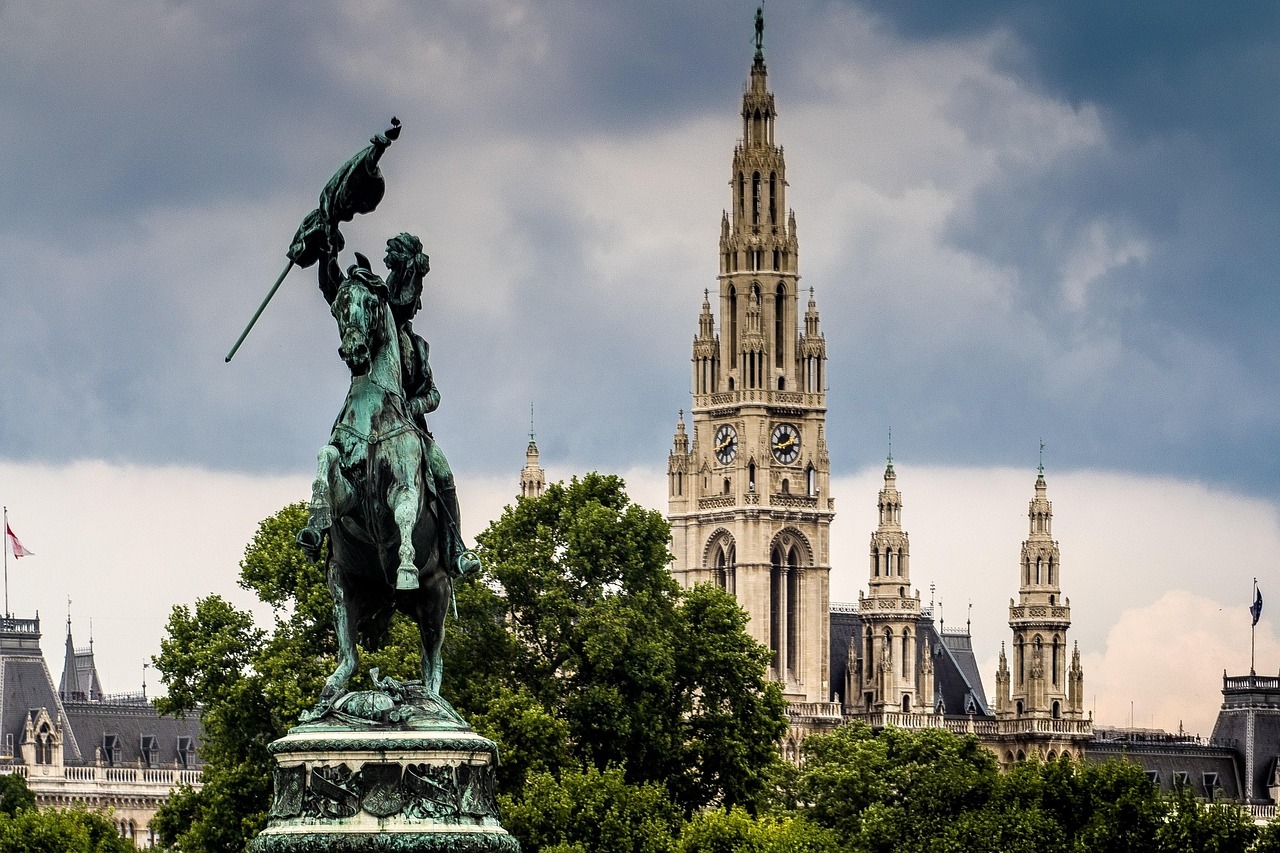
Why Vienna Works So Well for Italian Groups
Before exploring the practicalities of arrival, it is worth dwelling on why Vienna resonates so strongly with Italian travellers — because the city's specific qualities help explain why the weekend, from the very first moment, deserves to be handled with care.
A City That Italians Understand Immediately
There is a historical logic to the affinity between Italian visitors and Vienna that goes deeper than tourism. The Habsburg Empire and the Italian peninsula were intertwined for centuries — Venice, Milan, and much of northern Italy were under Habsburg rule for significant periods, and the cultural exchange that resulted left traces in both directions. Vienna's architecture, its music, its painting, and its culinary culture all carry Italian influences that Italian visitors detect immediately, sometimes consciously and sometimes as a subliminal recognition that this city, for all its Germanic rigour, has something Mediterranean in its bones.
The coffeehouse culture is the most obvious expression of this affinity. An Italian walking into Café Central — the magnificent vaulted room on Herrengasse where Trotsky and Freud and half the intellectuals of fin-de-siècle Europe once sat over their coffee — experiences something that is both entirely different from an Italian bar and entirely familiar in its values. The quality of the coffee matters. The ritual of the order matters. The time taken to drink it, the unhurried occupation of the table, the sense that a café is a place to think and talk and be rather than simply to consume — all of this is Italian in spirit, expressed in a Viennese idiom that makes it new and interesting rather than merely imitative.
The Art That Stops Italian Visitors in Their Tracks
Italy is, self-evidently, the country with the greatest density of great art in the world. Italian travellers are not easily impressed by museums. They have the Uffizi, the Vatican, the Brera, the Capodimonte. They know what great art looks like.
Vienna impresses them anyway. The Kunsthistorisches Museum — housed in a building of imperial magnificence facing the Natural History Museum across Maria-Theresien-Platz — contains one of the world's great collections, with particular strength in the Italian masters: Raphael, Titian, Caravaggio, Tintoretto, Veronese. For Italian visitors, encountering these works in a Viennese context — displayed in rooms of extraordinary decorative richness, in a city that collected them with the resources of an empire — is a specific and interesting experience. The paintings are familiar. The context is revelatory.
The Belvedere offers a different and equally powerful experience. The Upper Belvedere's collection centres on the Austrian and Central European painters of the late nineteenth and early twentieth centuries — Gustav Klimt, Egon Schiele, Oskar Kokoschka — whose work, for Italian visitors accustomed to the Renaissance and Baroque traditions, represents an encounter with a different but equally serious visual culture. Klimt's The Kiss, in particular, tends to stop Italian visitors in a way that few paintings manage.
The Music That Vienna Does Like Nowhere Else
Italy is the country of opera. Venice gave the world the opera house. Verdi and Puccini and Donizetti are Italian. And yet Vienna — with the Vienna State Opera, the Musikverein, the Konzerthaus, and a concert and performance calendar of extraordinary density — offers a musical experience that even Italian music lovers find genuinely impressive.
The Vienna State Opera is one of the great opera houses of the world, and its standing tickets — available at the box office on the day of performance — offer Italian groups access to productions of international quality at prices that make the experience entirely accessible. For a group of Italian friends with a love of music, an evening at the State Opera is one of those Vienna experiences that becomes, without question, the highlight of the trip.
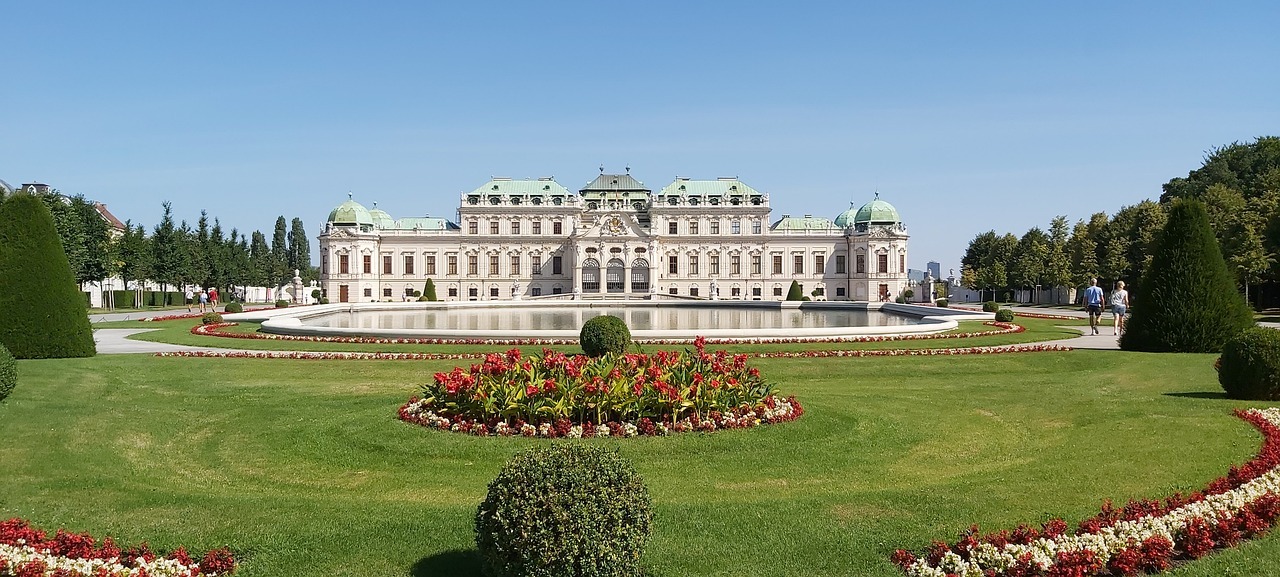
What the Vienna Weekend Looks Like for an Italian Group
A well-planned Italian group weekend in Vienna follows a natural rhythm — ambitious but not rushed, culturally rich but punctuated with the food, drink, and social time that Italian group travel requires.
Friday Evening: First Impressions and the Inner City
Italian groups typically arrive on Friday evening flights, and the first evening in Vienna has its own character. The inner city — the Innere Stadt — is the natural destination: the Stephansdom rising above the pedestrian streets, the Graben and the Kohlmarkt lined with elegant shops, the bars and restaurants of the first district providing the first proper Vienna dinner of the weekend.
Italian visitors tend to approach Viennese cuisine with a mixture of curiosity and professional scepticism — understandable, given the competition. The discovery that Viennese food, at its best, is genuinely excellent tends to produce a pleasant surprise. The Wiener Schnitzel in a proper Viennese restaurant — the real thing, not the tourist approximation — is a dish that Italian food lovers, after initial reservation, tend to pronounce worthy of respect. The local wines, particularly the white Grüner Veltliner served in a Viennese wine tavern, are a discovery that many Italian visitors do not anticipate and consistently appreciate.
Saturday: The Imperial Immersion
Saturday in Vienna for an Italian group is typically the day of full imperial immersion. Schönbrunn Palace in the morning — the baroque summer residence of the Habsburgs, with its 1,441 rooms, its formal gardens, and its hilltop Gloriette from which the view over Vienna is among the finest in Central Europe. For Italian visitors accustomed to the Villa d'Este or the Palazzo Reale, Schönbrunn offers a different scale and a different aesthetic — more northern, more formal, but no less impressive in its ambition.
The afternoon moves to the Hofburg and the first district — the Spanish Riding School, the Imperial Apartments, the Sisi Museum, and the streets of the old city that reward unhurried exploration with a coffeehouse stop that the whole group can agree is necessary and well-earned.
The Naschmarkt: Where Italian Visitors Feel at Home
One of Vienna's great revelations for Italian groups is the Naschmarkt — the open-air market running along the Linke Wienzeile with over 100 stalls of food, wine, cheese, spice, and street food from across the Mediterranean. For Italian visitors with a serious relationship with food culture and markets, the Naschmarkt is an immediate point of recognition and pleasure. The quality of the produce, the variety of the offer, and the social energy of the market environment feel Mediterranean in a way that surprises visitors who expected Central European austerity.
Sunday: Art, Baths, and the Journey Home
Sunday mornings in Vienna belong to the museums or the thermal baths — and for Italian groups, the combination of both is entirely achievable. The Therme Wien thermal spa complex offers pools, saunas, and wellness facilities that provide a physical recovery from two days of city exploration. For Italian visitors who may not have expected to find this kind of experience in Austria, Therme Wien is a genuine discovery — warm water, relaxed atmosphere, and the particular pleasure of doing very little in surroundings designed specifically for that purpose.
Day Trips That Extend the Vienna Experience
For Italian groups with an extra day or a flexible return flight, Vienna's surroundings offer destinations that add entirely different dimensions to the weekend.
The Wachau Valley: Wine Country That Resonates with Italian Sensibility
The Wachau Valley — the stretch of the Danube between Krems and Melk, approximately 80 kilometres west of Vienna — is one of Austria's great landscapes and a UNESCO World Heritage Site. The river winds between vine-terraced hills and medieval villages, with the extraordinary Melk Abbey dominating the valley from its rocky outcrop above the water. For Italian groups with a deep familiarity with their own wine country — Chianti, Barolo, Prosecco — the Wachau offers a landscape of similar beauty and a wine culture of comparable seriousness. The Grüner Veltliner and Riesling wines produced on these terraces are worth discovering, and the drive through the valley is one of the most beautiful in Austria.
Salzburg: The Alpine City That Speaks to Italian Aesthetics
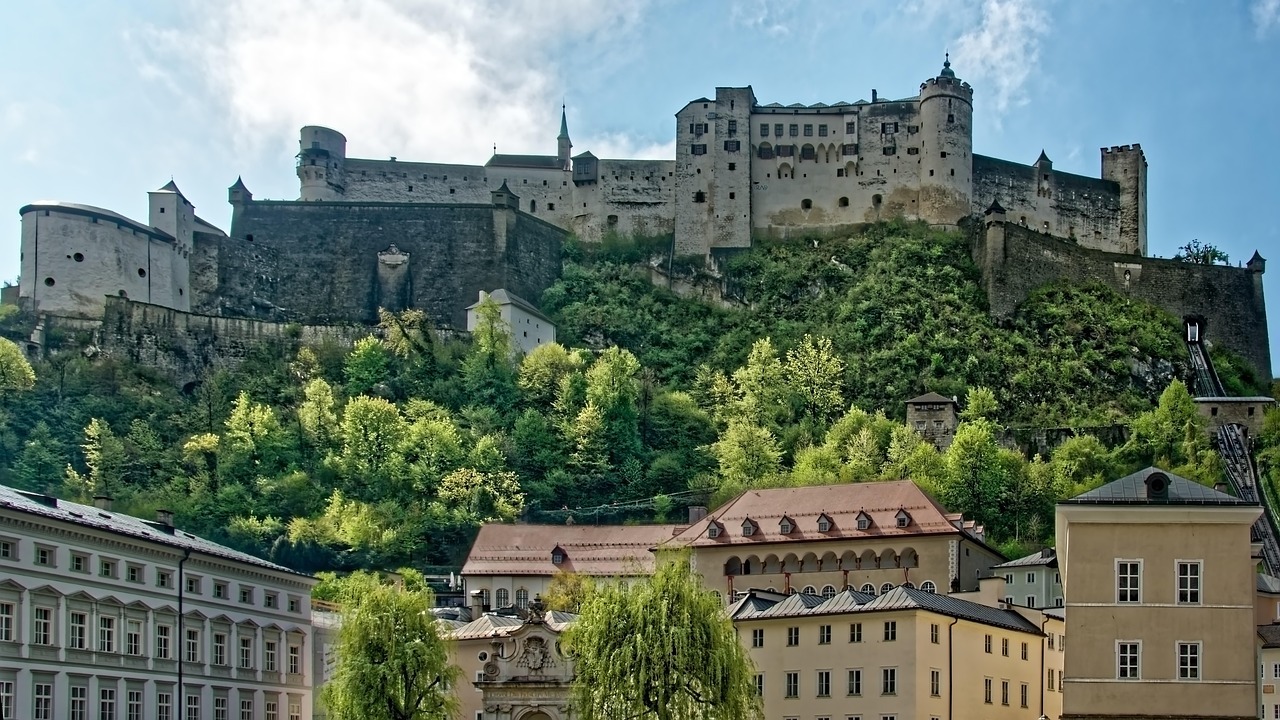
Salzburg, approximately three hours from Vienna by road, rewards Italian groups who stay long enough to make the journey worthwhile. Mozart's birthplace, the baroque old town enclosed by the Salzach and presided over by the Hohensalzburg Fortress, and the Alpine backdrop that arrives suddenly and dramatically after the flat Viennese landscape — Salzburg is a destination that consistently impresses Italian visitors for whom the combination of art, music, architecture, and natural beauty is the most satisfying kind of travel.
Bratislava: A Second Capital in an Afternoon
Bratislava, just 60 kilometres east of Vienna along the Danube, offers Italian groups the unusual experience of visiting two European capitals in a single weekend. The Slovak capital's compact old town, riverside castle, and dramatically lower prices relative to Vienna make it a natural half-day excursion — and WienTransfer can arrange the transfer as part of a broader weekend package.
Why Private Group Transfer with WienTransfer Is the Right Choice
For an Italian group arriving at Vienna International Airport — energised, slightly competitive about who had the best idea for this trip, and ready to start the weekend with the minimum possible delay — the transfer from the airport to the city is the first test of how well the logistics have been organised.
The Group Stays Together From the First Moment
Italian group travel has its own social grammar, and one of its fundamental principles is that the group is the group — it functions as a unit, it makes decisions collectively, it experiences things together. The moment you split an Italian group of eight into three taxis at an airport, the social cohesion of the trip takes a small but real hit. Someone gets a driver who doesn't speak Italian or English. Someone else's taxi takes a different route and arrives ten minutes later. The group reassembles at the hotel slightly fragmented rather than collectively energised.
A WienTransfer private minivan keeps the entire group together from the arrivals hall to the hotel entrance. The conversation — the plan for the evening, the debate about which restaurant, the first jokes of the weekend — happens in the vehicle, collectively, with everyone present. The weekend starts as a group experience rather than a logistical exercise.
Italian Groups and the Social Transfer
For Italian travellers, the social dimension of the journey is not separate from the experience — it is part of it. The forty minutes from Vienna Airport to the city centre in a comfortable, spacious minivan, with the group together and the weekend ahead, is already the beginning of what will be remembered. It is not dead time to be endured. It is the overture to the main event — and it should be conducted in a vehicle that suits the occasion.
The Economics That Make Sense
Italian groups travelling on Ryanair or easyJet fares have typically been attentive to cost — which makes the transfer economics worth examining honestly. A group of eight people splitting the cost of a WienTransfer private minivan pays a per-person fare that is regularly competitive with — and frequently less than — the combined cost of multiple taxis making the same journey. The group travels together in a larger and more comfortable vehicle and pays less per head for the privilege.
For a group whose weekend has been built around affordable flights and a carefully chosen hotel, recovering cost efficiency at the transport stage is genuinely valuable — money that can be redirected toward a dinner worth talking about, a round at a Viennese wine bar, or standing tickets at the State Opera.
Fixed Pricing That Removes Uncertainty
Vienna Airport taxis operate on meters, and the 18-kilometre journey to the city centre produces fares that vary with traffic and time of day. On a Friday evening when airport traffic into the city can be heavy, metered fare uncertainty is a real issue for a group trying to manage a weekend budget.
WienTransfer's fixed pricing is agreed at the time of booking. The group knows the cost before they land. No meters, no traffic supplements, no late-arrival charges, no luggage fees. One price, confirmed in advance, for eight people and their weekend bags.
Flight Monitoring for Low-Cost Realities
Budget flights between Italian cities and Vienna carry the delay risk that low-cost aviation reliably produces. A Ryanair service from Milan Bergamo or an easyJet flight from Rome does not always operate to schedule. WienTransfer monitors the incoming flight from departure and adjusts the pickup accordingly. When the group lands — on time or ninety minutes late — the driver is waiting in arrivals with the group organiser's name on a sign, composed and ready, as if the delay never happened.
For the person in the group who organised everything — who found the flights, booked the hotel, and has been answering questions on the WhatsApp group for three weeks — the knowledge that the airport transfer is handled regardless of what Ryanair does is a specific and deeply appreciated peace of mind.
A Driver Who Adds Local Value
For an Italian group visiting Vienna for the first time, a WienTransfer driver is the first Viennese encounter of the trip. A driver who can point out the Prater Ferris wheel as it comes into view, mention the best time to visit the Naschmarkt, or confirm that yes, the Schnitzel at a particular restaurant in the first district is worth the queue — adds a layer of local warmth to the arrival that sets the right tone for a city whose hospitality, once discovered, becomes one of the most appreciated aspects of the whole weekend.
La Dolce Vienna: The Weekend That Begins at Arrivals
Vienna does not keep its best things hidden. The palaces are visible from the street. The coffeehouses are open to anyone who wants to sit down. The art is in buildings designed to be entered. The music is performed in halls that sell tickets to anyone who wants to hear it. The city extends a genuine welcome — and Italian groups, who bring with them a love of beauty, food, art, and the pleasure of being together in a magnificent place, are among the visitors who respond to that welcome most naturally and most warmly.
The weekend has sixty hours. Every one of them is an opportunity. It begins at Vienna International Airport, where a WienTransfer driver is waiting with the group's name on a sign — and the first good decision of the trip has already been made.
Book your group airport transfer at wientransfer.com — private, professional, fixed-price transfers from Vienna International Airport for Italian groups and all international visitors, serving Vienna, the Wachau Valley, Salzburg, Bratislava, and destinations across Austria.